> ## Documentation Index
> Fetch the complete documentation index at: https://docs.slng.ai/llms.txt
> Use this file to discover all available pages before exploring further.
# Bring your own LLM
1. Add your LLM details in [app.slng.ai/byok-models](https://app.slng.ai/byok-models)
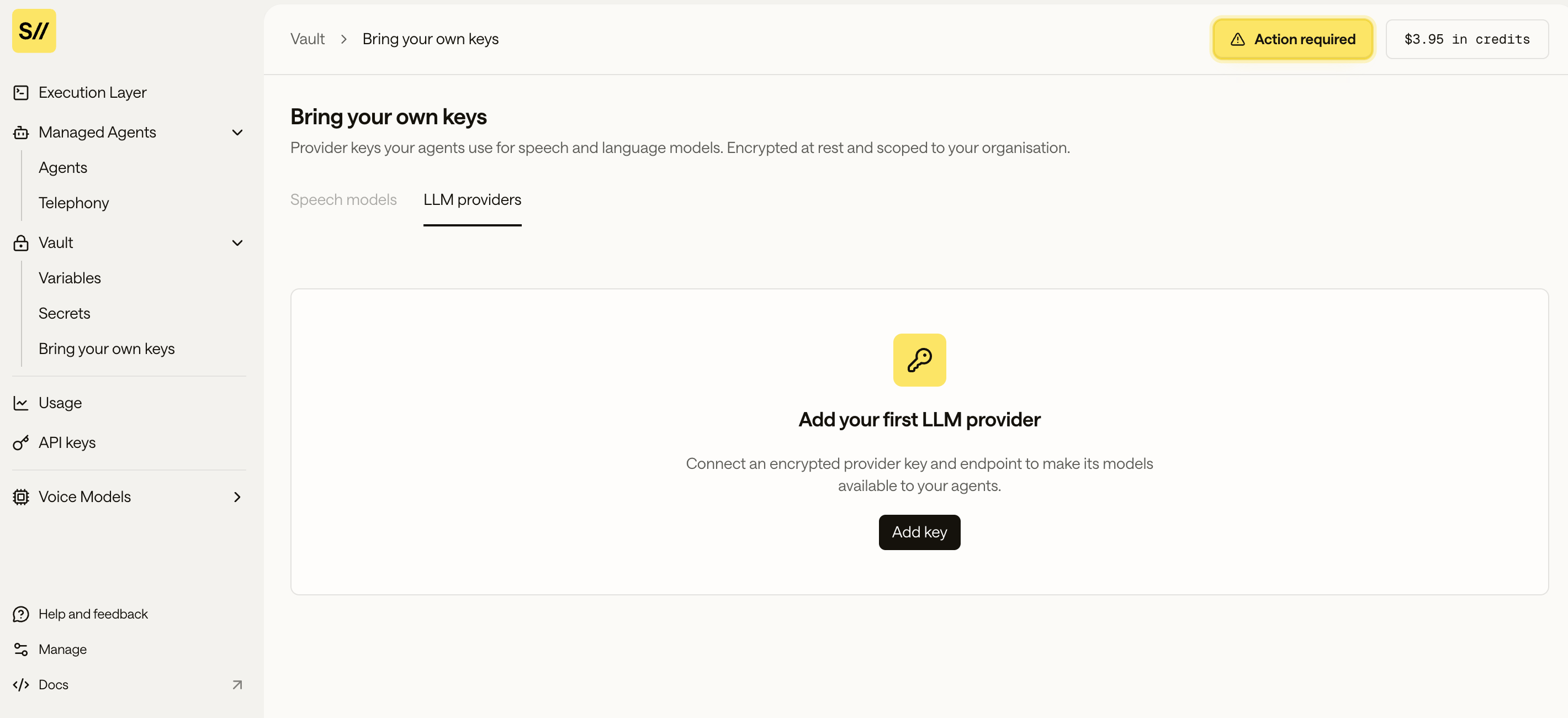
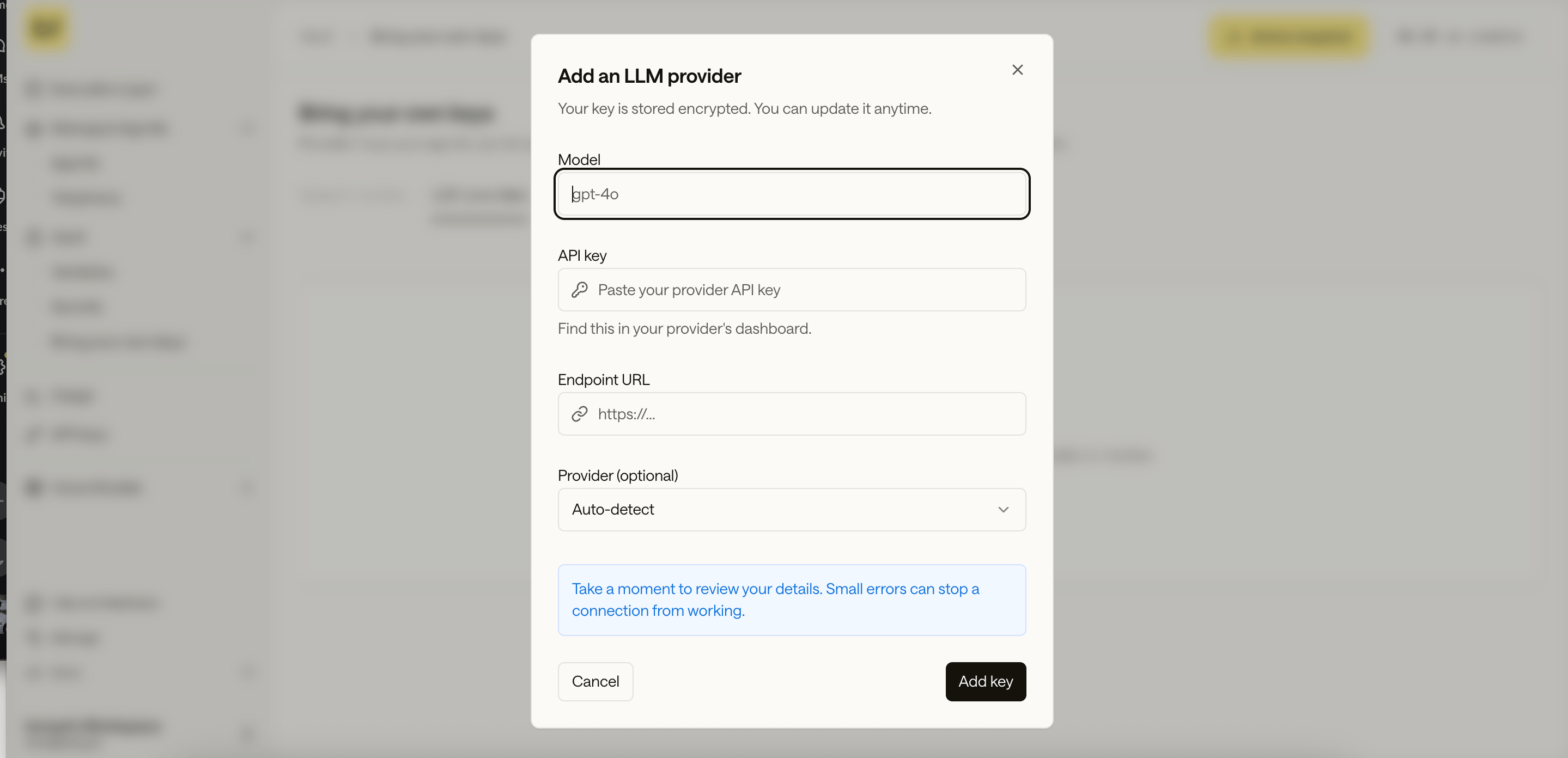 2. **SLNG BYOK LLM (the default).** You decide the setup you prefer in SLNG — which models to use, in what order of preference your own endpoints and provider API keys — and SLNG configures it for your org. From then on `slng/auto` just works and your requests carry nothing extra.
3. **You send the configuration inline, per request**, in an optional top-level body field called `slng_config`. The request then runs against your own model endpoints, with your own provider API keys, exactly as described in the config you sent.
# How does it work?
**What gets stored per config**
2. **SLNG BYOK LLM (the default).** You decide the setup you prefer in SLNG — which models to use, in what order of preference your own endpoints and provider API keys — and SLNG configures it for your org. From then on `slng/auto` just works and your requests carry nothing extra.
3. **You send the configuration inline, per request**, in an optional top-level body field called `slng_config`. The request then runs against your own model endpoints, with your own provider API keys, exactly as described in the config you sent.
# How does it work?
**What gets stored per config**
Each BYOK config is tied to a region (India, Indonesia, Europe, US)
**Using it — no client key in the request**
Once registered, the client calls SLNG's normal OpenAI-compatible endpoint (`POST https://[region].context-router.slng.ai/v1/chat/completions`) with just their `SLNG_API_KEY` as the bearer token same as any other request. There's no field in the request body for the client's own LLM key; SLNG resolves org identity from the SLNG API key and looks up the matching BYOK config server-side, the same way it already resolves agent/session scope.
**Model selection**
`model: "slng/auto"` (or a specific configured model name) routes through the org's registered BYOK model instead of SLNG's own hosted catalog. If a client's custom model name collides with an SLNG catalog name, the client's own model takes priority.
## Configuration
You can check the [Integration guide](/context-router/)