
Global voice agent infrastructure
Use SLNG speech models and the Context Router with your existing orchestrator. Bring your own provider keys where you need them.
Teach your coding agent to build with SLNG, or read the quickstart to call the API by hand.
Model optimization and Agent Builder
Speech to text (STT)
Transcribe audio files or live streams. Single-language or auto-detect across 10+ languages.
Context Router
Optimize the thinking part of your voice agent. Smarter and faster.
Text to speech (TTS)
Text in, audio out. Multiple voices and languages, over HTTP or streaming WebSocket.
Agent Builder
Configure Listen, Think, and Speak, then deploy your agent to phone or web.
Every turn takes the path it actually needs
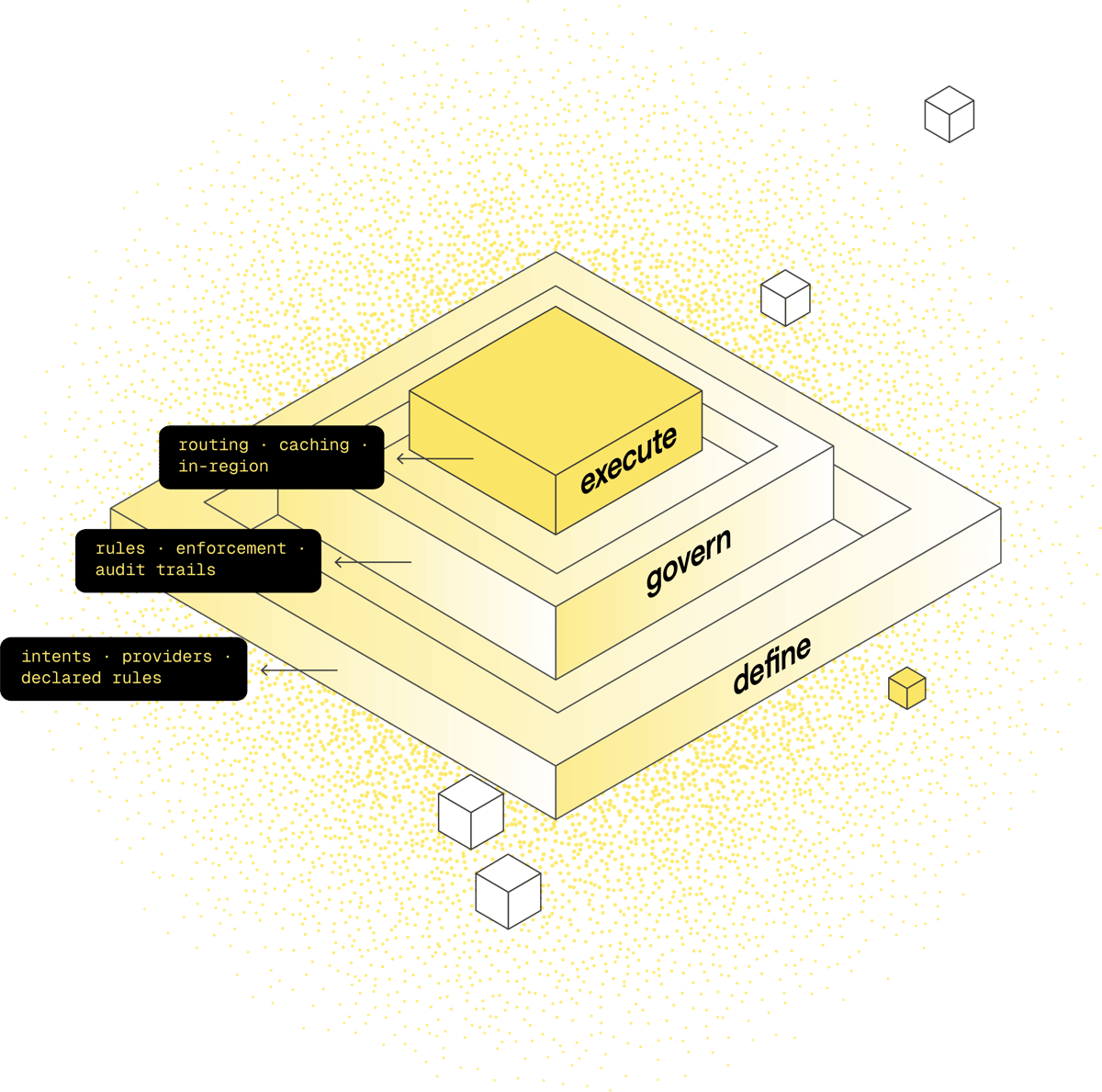
A 16-turn call makes 48 model calls. By default each one runs from scratch, even for a greeting you have synthesized a thousand times. The execution layer changes that across three stages, and each call improves routing and cache coverage for the next, so cost and latency keep falling as usage grows.

Listen
Clean input audio before transcription, so the model hears the caller and not the background noise.
Think
Decide whether a turn needs full LLM reasoning, local inference, or no inference at all.
Speak
Serve from cache when the audio already exists. Synthesize only what is new.
Route only what needs full model reasoning
Point your agent’s large language model (LLM) field at the Context Router. It classifies each turn and chooses full reasoning, local inference, or a cached response. You keep your prompts while reducing LLM cost and turn latency.
Select your region per request
Call a regional base URL such as eu-west.api.slng.ai or us-east.api.slng.ai. Each region has its own gateway, and requests are not routed between regions.






Works with the models you already use
Register your provider keys once, then call 30+ supported speech models through the same HTTP and WebSocket APIs.










Start building
Install the skills for your coding agent, or make your first request by hand.