Start an outbound call from the dashboard or API, pass per-call values, or process a contact list.
Dispatching a call tells an agent to dial a number now. The agent places the
call through its outbound connection, so the caller ID comes from that
connection’s pool rather than from the request.
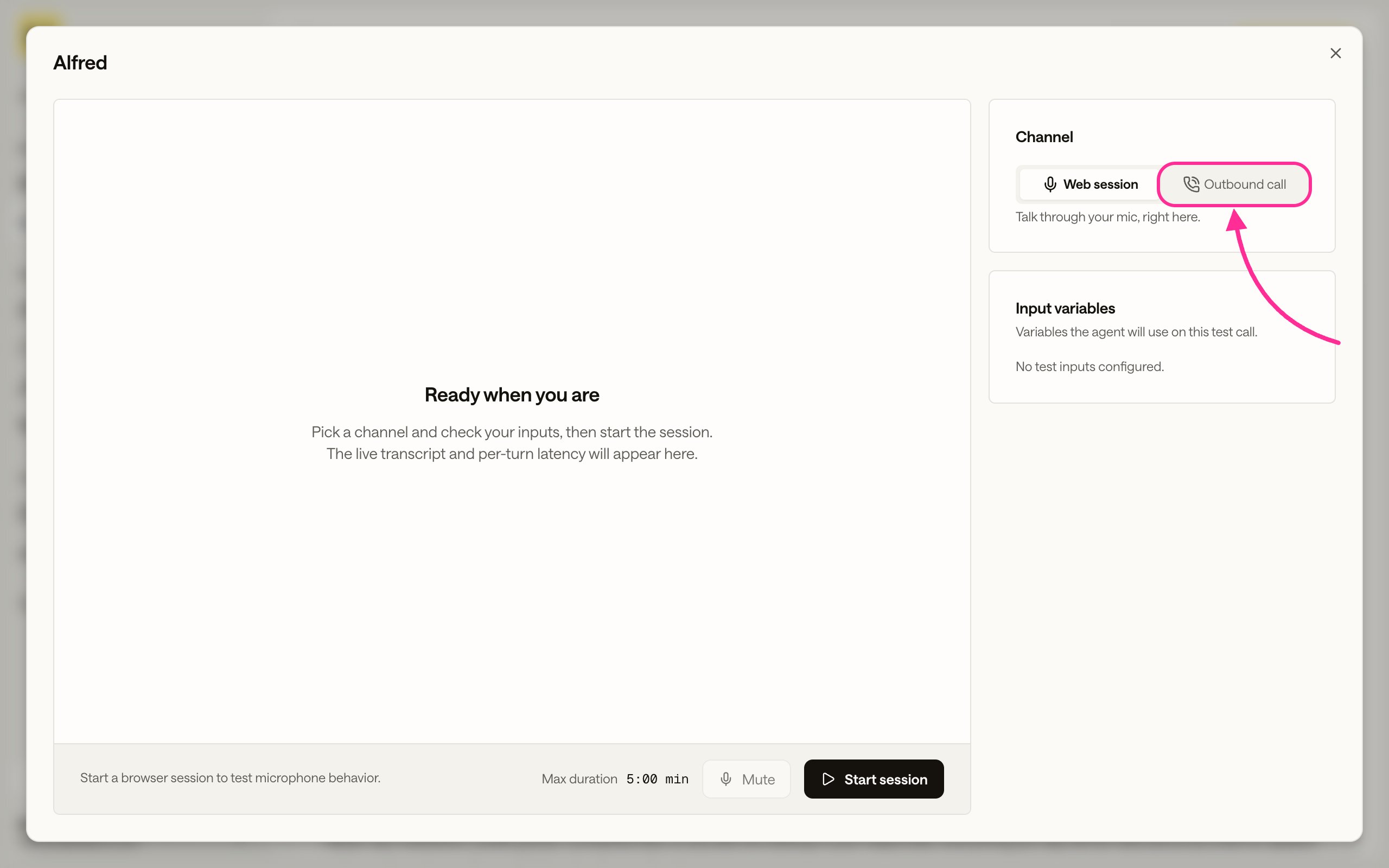
Open the project and click Test agent. The panel opens on the
Web session channel.
The Test agent panel. Switch the channel to Outbound call.
2
Switch to Outbound call
Set the Channel to Outbound call. A Number to call field
appears. If the panel says telephony setup is needed, the agent has no
outbound connection attached.
The Outbound call channel, with a field for the number to call.
3
Enter the number and start the call
Enter the destination under Number to call in E.164 format and click
Start call. The agent dials while you watch the transcript.
A number entered and ready. Start call places the outbound call.
Use this to check an agent before you automate it. For anything repeated,
use the API.
Send the destination number to the agent’s calls endpoint.
If the agent’s system prompt or greeting uses {{variable}} placeholders, pass
values for them in arguments. They override any defaults set on the agent, and
the rendered prompt is stored with the call record.
The API accepts one call per request. When you process a contact list, control
the request rate and retry 429 Too Many Requests responses. Limiting concurrent
requests does not control how many requests you send within the rate-limit
window.This example sends calls sequentially, waits between contacts, and honors the
Retry-After header before retrying a rate-limited request. Set
DISPATCH_INTERVAL_MS for the rate limit applied to your account.
Each dispatched call becomes a record you can read back: its status, the
arguments you passed, the prompt after those arguments were filled in, and the
transcript once the call ends. See
Observability and usage.